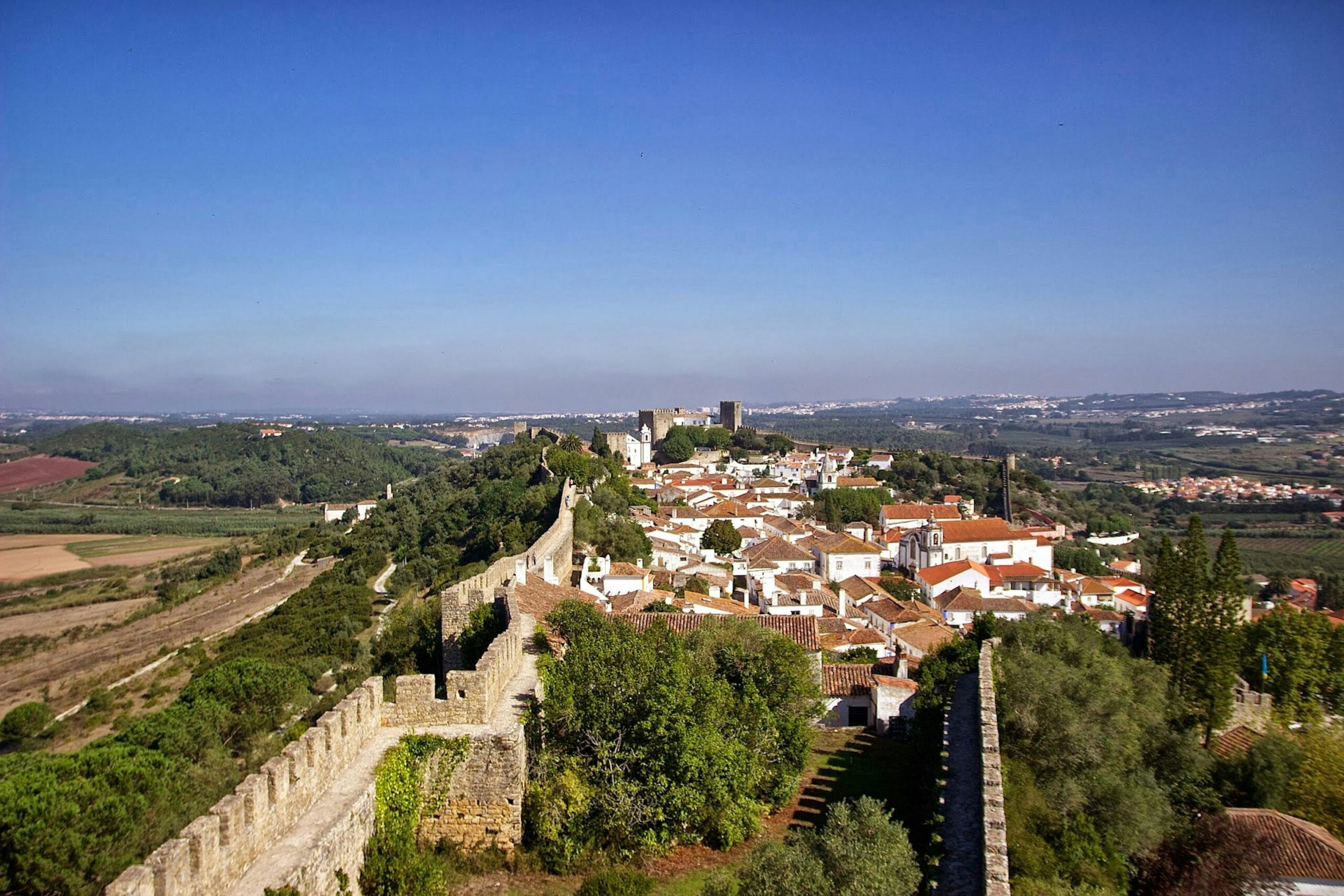
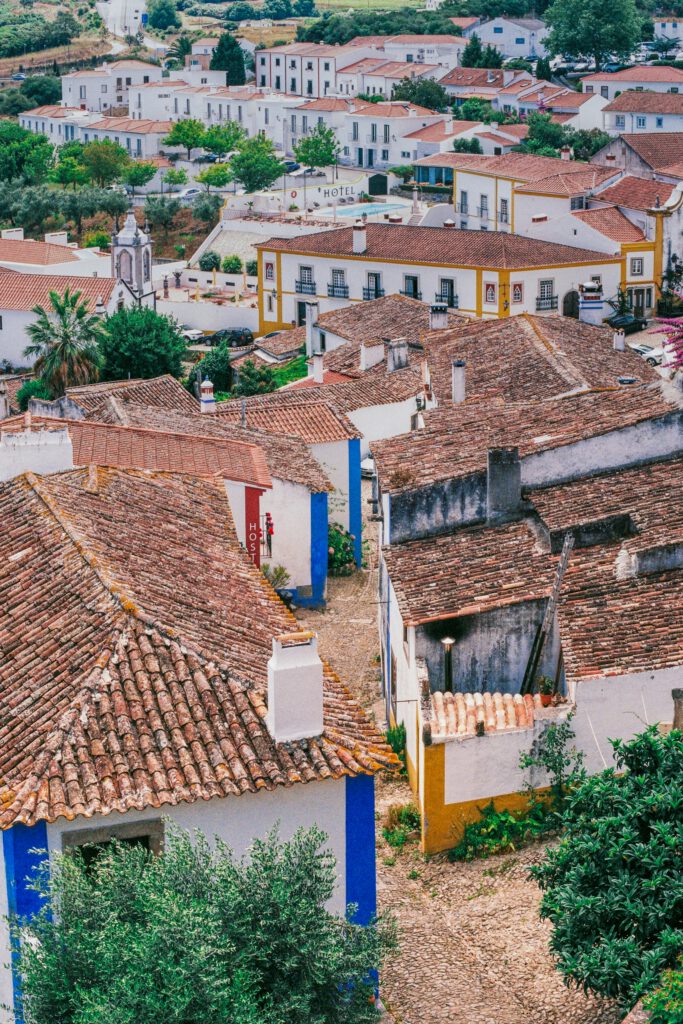
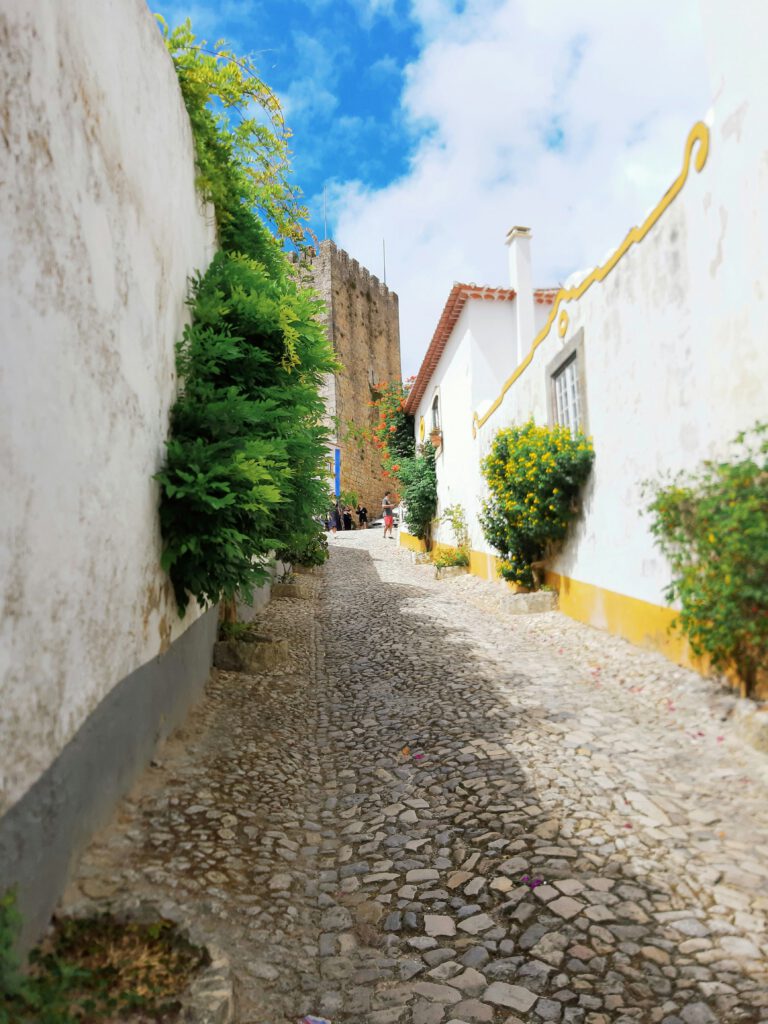
Óbidos is a beautiful walled village, widely considered one of the most charming and picturesque towns in central Portugal. Its narrow cobbled streets, traditional whitewashed houses adorned with blue and yellow details, and vibrant flower boxes create a truly enchanting atmosphere. Dominated by an imposing castle and surrounded by remarkably well-preserved medieval walls, Óbidos offers visitors a journey back in time.
Population: 11.500 inhabitants
Its name likely derives from the Latin word oppidum, meaning “fortified city.” The area has been inhabited since the late Paleolithic period, with later Roman and Moorish occupation. In 1148, the town was conquered by Afonso Henriques, and it received its first charter in 1195 under Sancho I of Portugal. Over the centuries, Óbidos became part of the dowry of several Portuguese queens, earning it the nickname “Village of the Queens,” a title that still reflects its historical and romantic legacy.
Among its notable landmarks is the Church of Santa Maria, where Afonso V of Portugal married his cousin Isabella of Coimbra in 1441, when both were still children. The village’s main gate features an inscription ordered by John IV of Portugal, giving thanks to the Virgin Mary for protecting the country during the Portuguese Restoration War. Inside, visitors can also admire the remains of the Chapel of Our Lady of Piety, decorated with beautiful 18th-century blue and white tiles.
Regional delicacies
Ginjinha de Óbidos ( cherry licor ); roasted hog; roasted rabbit with fruits rice
Strolling along Rua Direita, the village’s main street, reveals a captivating mix of medieval charm: winding alleys, Manueline-style windows, ancient doors, and colorful façades. This lively street is also home to numerous handicraft shops, where traditional products tempt every passerby. A visit would not be complete without tasting the famous local cherry liqueur, “Ginjinha,” often served in a small edible chocolate cup. Throughout the year, Óbidos hosts various cultural events, including the well-known medieval market held each July, when the town transforms into a vibrant scene from the Middle Ages. Just a short drive away, the Óbidos Lagoon offers stunning views and a peaceful, romantic setting that perfectly complements the magic of the village.
Not to be missed ...
Santa Maria de Óbidos Church; the Castle; Saint Martin Chapel; Our Lord da Pedra Sanctuary; Misericordy Church; Josefa D´Obidos Museum