Mafra is a town with ancient roots, as archaeological remains suggest human presence since at least the Neolithic period. The origin of its name remains uncertain, having evolved over time through forms such as Mafara, Malfora, and Mafora, adding a sense of mystery to its early history.
Population: 77.000 inhabitants
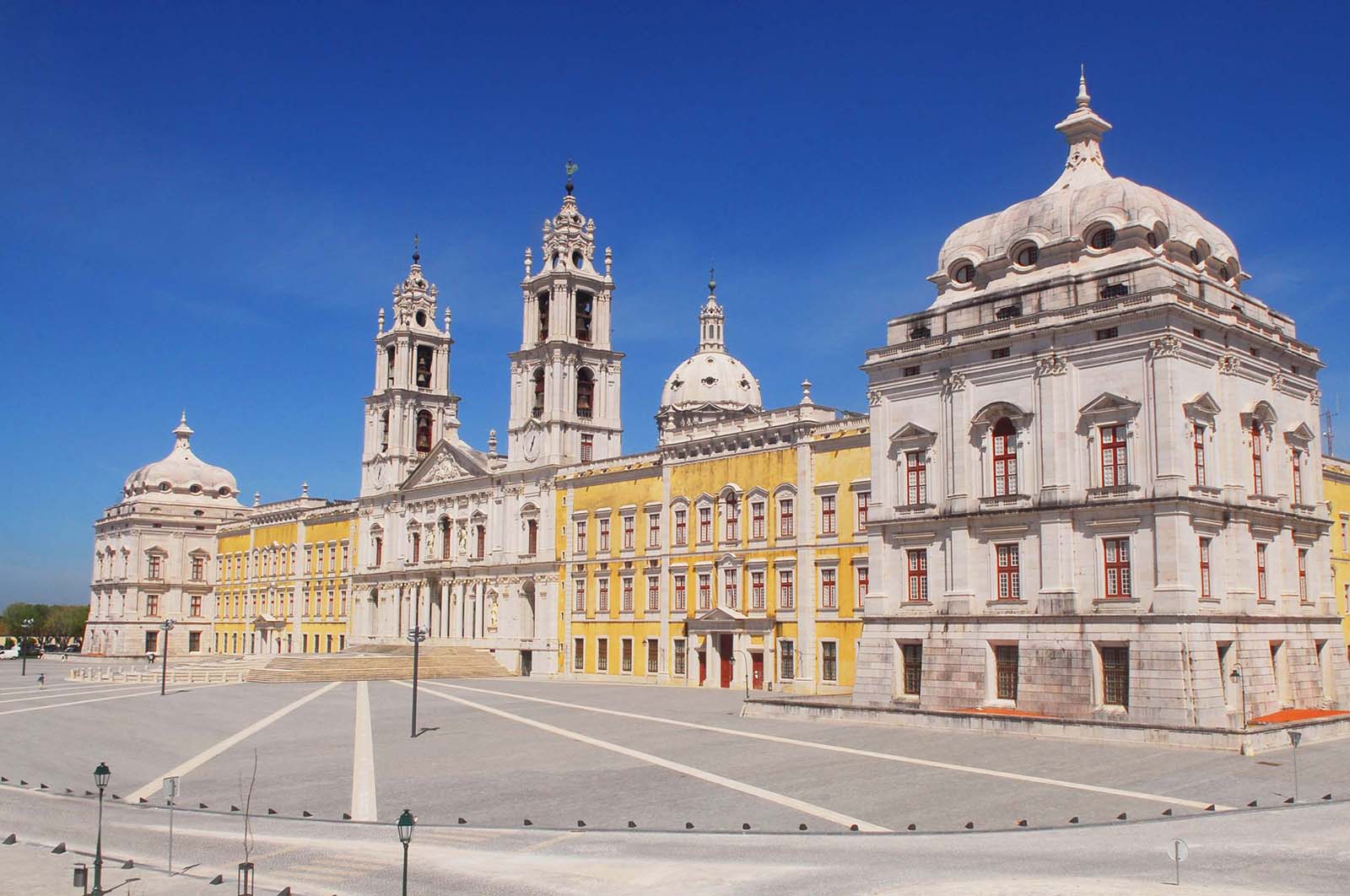
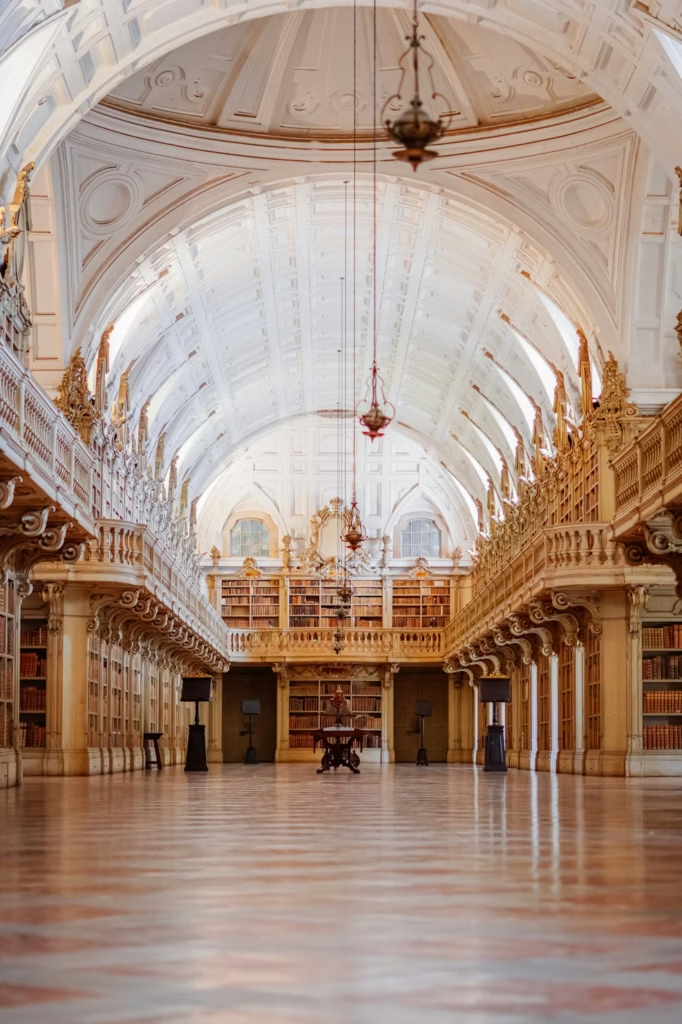
Despite its modest size, Mafra is home to one of the most impressive monuments in Europe, the Mafra National Palace. This grand 18th-century complex includes a vast monastery, a magnificent basilica, and an extraordinary library housing over 36,000 ancient books. One of its most curious features is the colony of bats that inhabit the library, playing a vital role in preserving the collection by protecting it from insects.
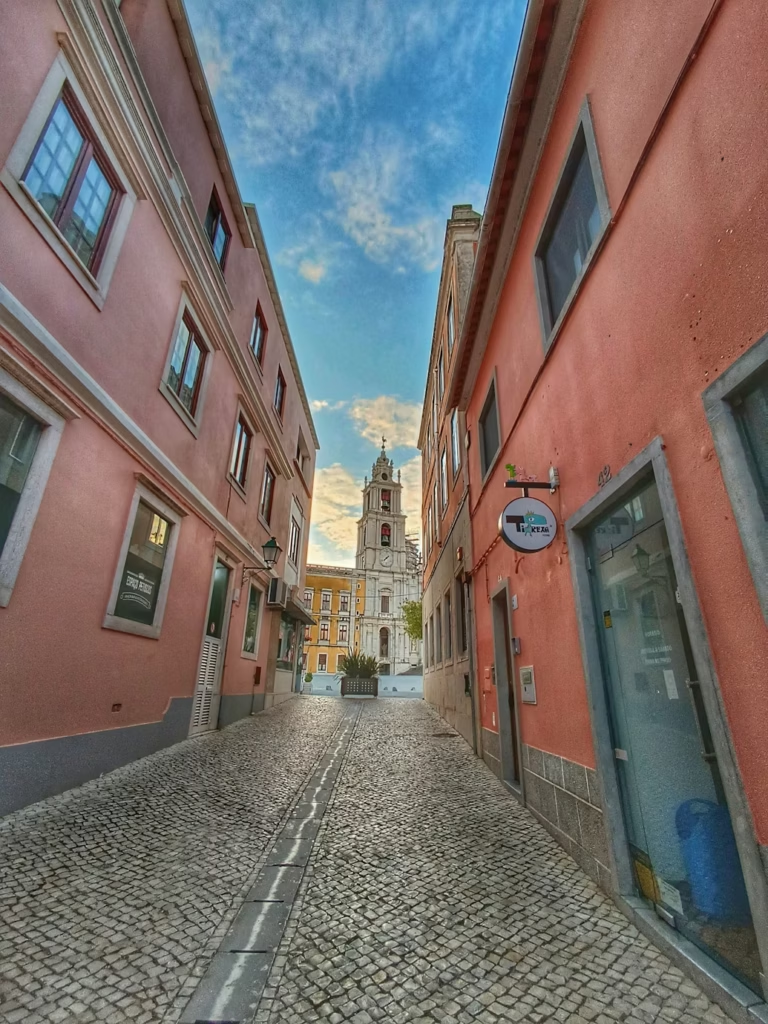
Located just 30 kilometres northwest of Lisbon, Mafra is an ideal destination for a day trip. While the palace is the main highlight, the town itself offers a pleasant and relaxed atmosphere, with a charming centre, traditional streets, and a variety of restaurants and cafés perfect for enjoying a leisurely meal.
Regional delicacies
Pão com chouriço (Bread with Sausage); Pastéis de feijão; Pastéis de Amêndoa; Trouxas da Malveira
In the surrounding area, visitors can explore the José Franco Village, a unique pottery workshop in the village of Sobreiro that recreates traditional rural life through detailed clay figures, both life-sized and miniature. Just a short drive away lies Ericeira, a beautiful seaside village historically frequented by Maria II of Portugal, who came to bathe in its reputedly therapeutic waters. The wider region is rich in cultural traditions, including local fairs such as the well-known Malveira Fair, offering visitors an authentic glimpse into Portuguese heritage and rural life.
Not to be missed ...
Our lady Encarnação Church; Palace and Convent of Mafra; Cheleiros; Saint Peter Church; Aldeia de José Franco