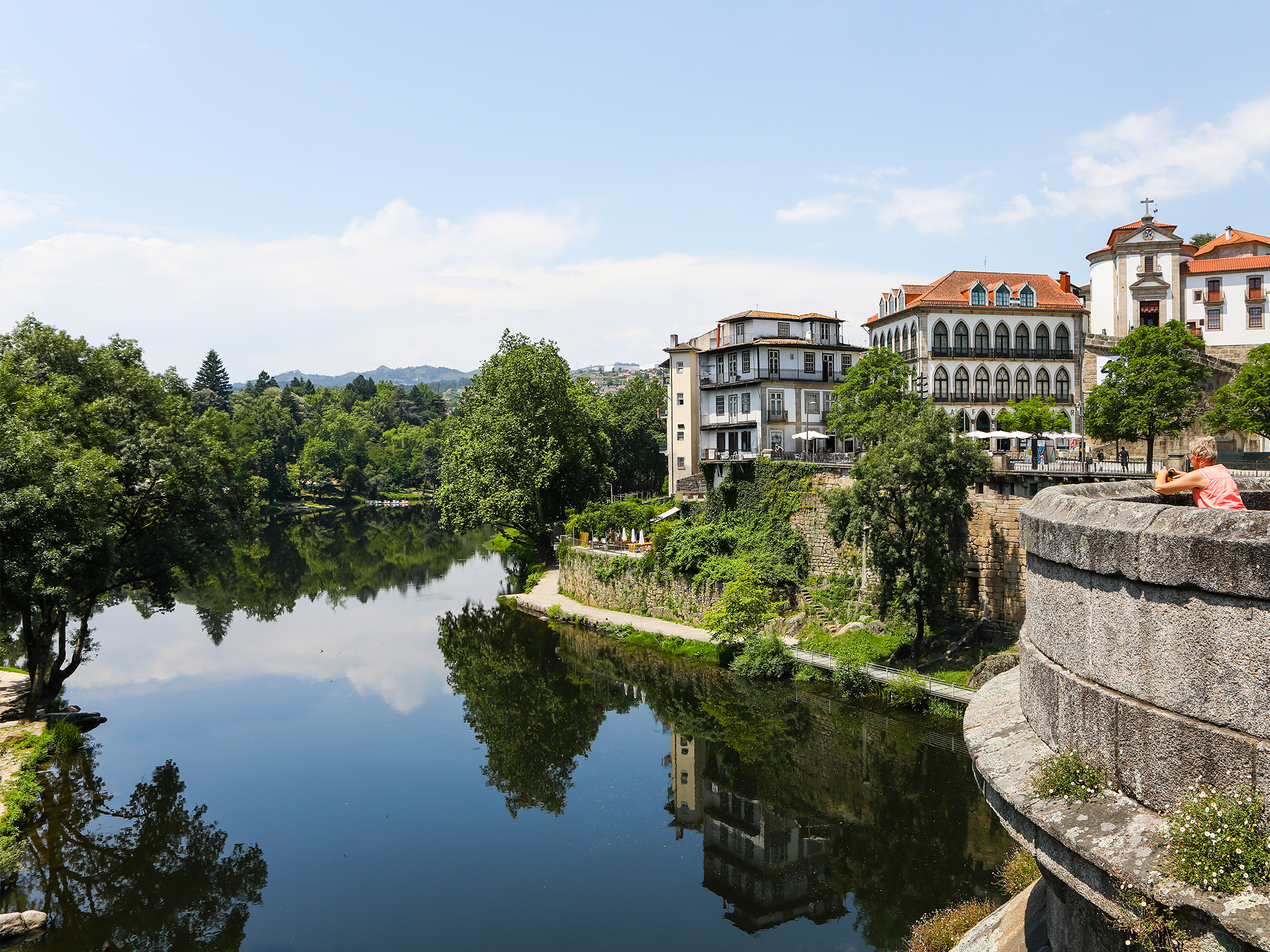
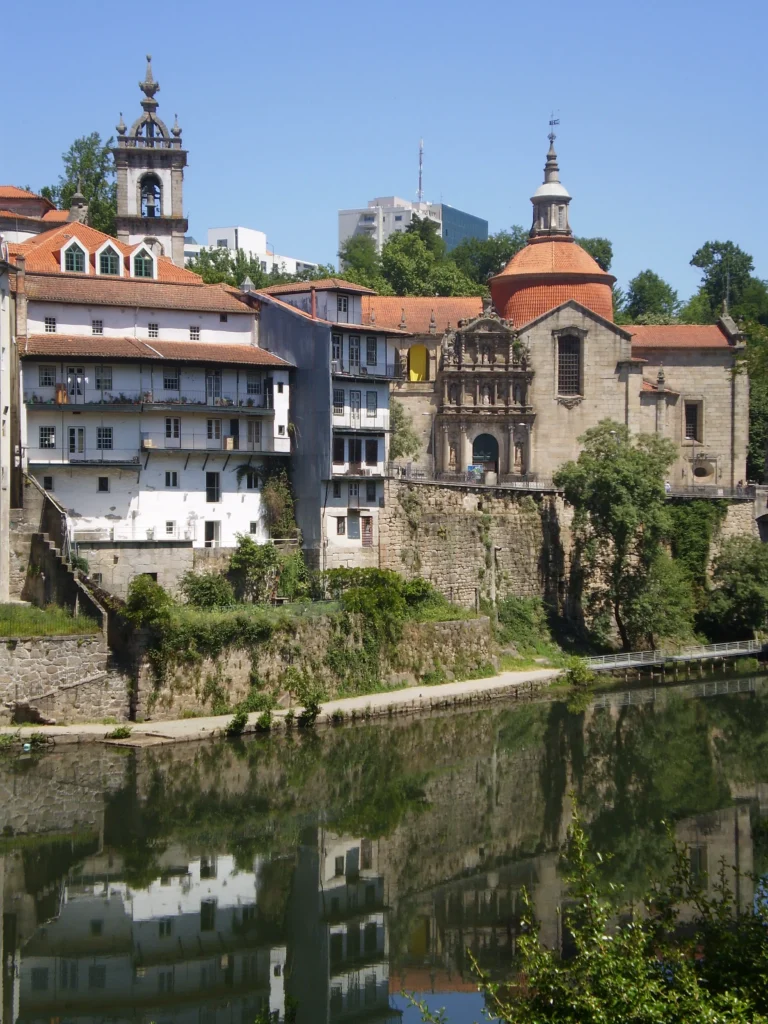
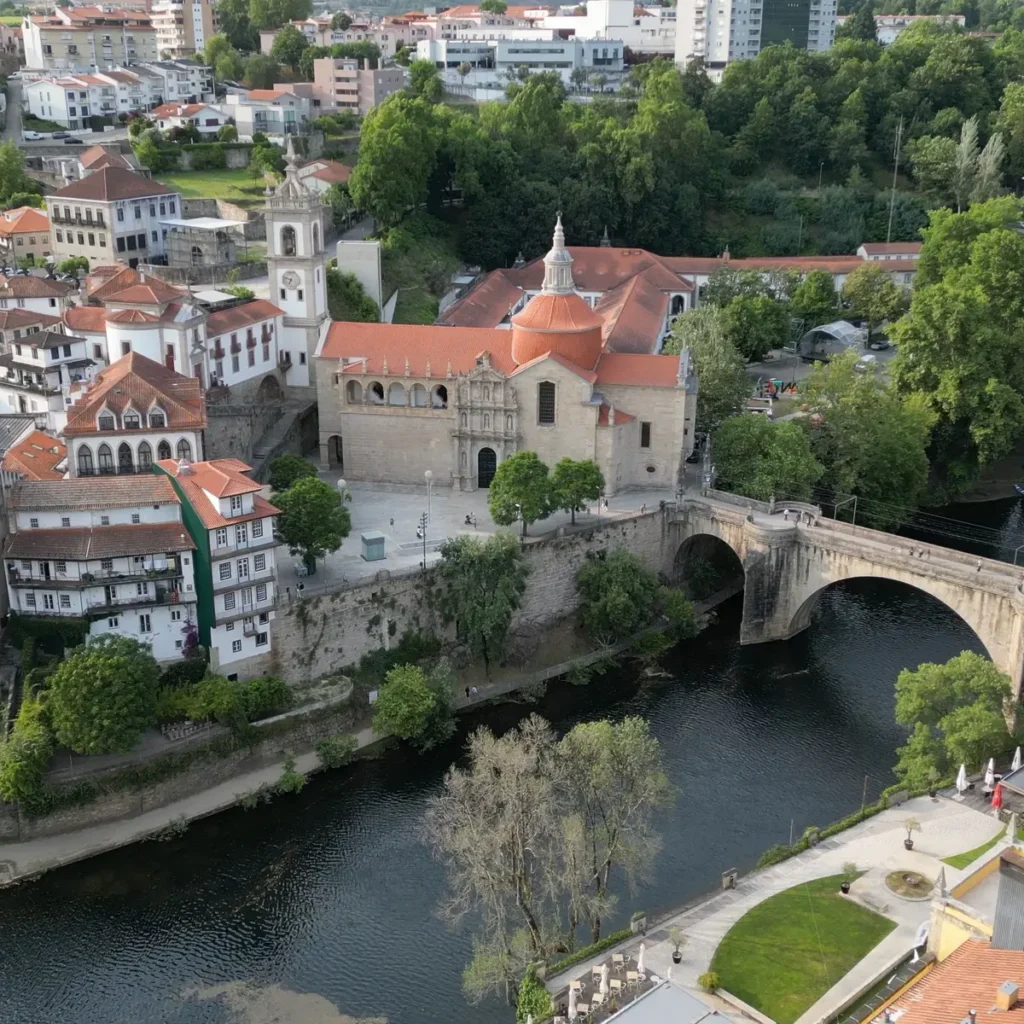
Amarante is a town shaped by centuries of history and human passage. Once a key crossroads of Roman roads, it developed between the banks of the Tâmega River and the slopes of the Serra do Marão, welcoming weary travelers with hearty meals and shelter. This landscape and way of life nourished not only the body but also the spirit, inspiring renowned figures such as Teixeira de Pascoaes and Amadeo de Souza-Cardoso. Over time, Amarante cultivated rich traditions rooted in a constant and fascinating balance between the sacred and the profane.
Population: 56.500 inhabitants
Its origins likely date back to prehistoric civilizations that inhabited the Serra da Aboboreira, although the identities of its earliest settlers remain unknown. Amarante only began to gain prominence in the 12th century with the arrival of Saint Gonçalo. Born in Guimarães, according to tradition, he settled here after pilgrimages to Rome and Jerusalem. In his honor, the first bridge over the Tâmega River was built, transforming Amarante into an important pilgrimage destination and contributing to its growth. In the 16th century, King João III ordered the construction of the Monastery of São Gonçalo beside the bridge, where the saint is believed to have lived and been buried.
Amarante also played a heroic role in Portuguese history. In the early 19th century, during the Napoleonic invasions, the town became the stage for the legendary Defense of the Bridge of Amarante. Led by General Silveira, this resistance earned him the title of Count of Amarante and granted the town the prestigious Medal of the Military Order of the Tower and Sword, still proudly displayed on its coat of arms.
Regional delicacies
Falo de S.Gonçalo; papos de Anjo; Brisas do Tâmega; Lérias; Maronesa meat; Arouquesa Veal; Bacalhau à Zé da Calçada; Arroz de Frango
Today, strolling through Amarante’s historic streets reveals traditional houses, medieval traces, and fine examples of Romanesque architecture, especially within the old town. The experience would not be complete without enjoying one of its local restaurants, where veal dishes remain a regional specialty.
A visit to the Monastery of São Gonçalo is essential, as is a stop at the main square, where vendors sell the town’s most curious delicacy: the traditional sweets of São Gonçalo. Their unmistakably phallic shape makes them a source of laughter and fascination, known locally as “quilhõezinhos de São Gonçalo.” According to tradition, during the June festivities, young men would offer these sweets to the women they hoped to win over. While times have changed, the legend endures: Saint Gonçalo is believed to be a matchmaker, and those seeking love or engagement should touch his tomb for good fortune.
Not to be missed...
Church and Monastery of Saint Gonçalo; Amadeo de Souza-Cardoso Museum; Church of Saint Domingos and Sacred Art Museum; Solar dos Magalhães; Saint Gonçalo Festivities