An ancient city where centuries intertwine across its squares and streets, reflecting a rich tapestry of times, cultures, and architectural styles. Dating back to Roman times, Lamego was definitively reconquered in 1057 by Fernando Magno de Leão from the Moors. It was here that the legendary Cortes de Lamego took place, where King Afonso Henriques was acclaimed as the first King of Portugal and the “Rules of Succession to the Throne” were established.
Population: 27.500 inhabitants
The city’s historic fair, still vibrant today, draws crowds from near and far, including traders and the Cordovan Gypsy merchants from Spain. Lively commerce thrives along the New Street, a site once home to a thriving Jewish community that built a synagogue next to the Portas do Sol.
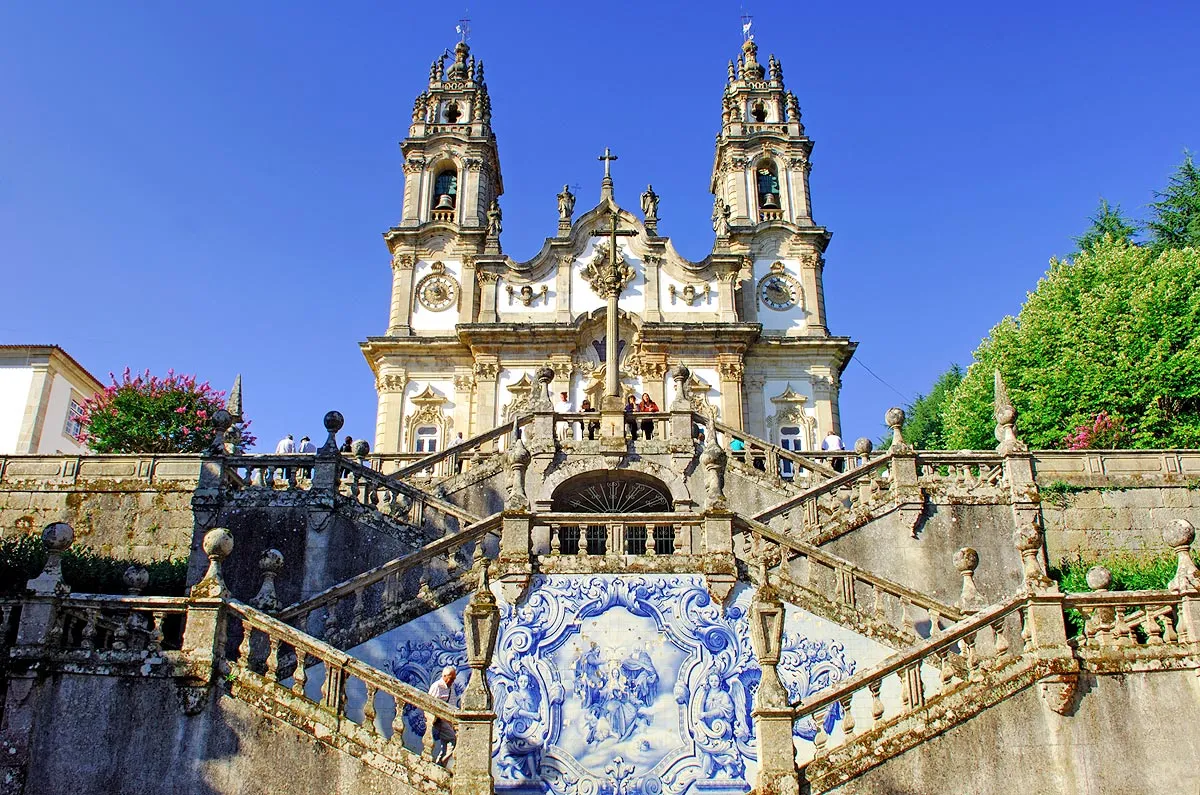
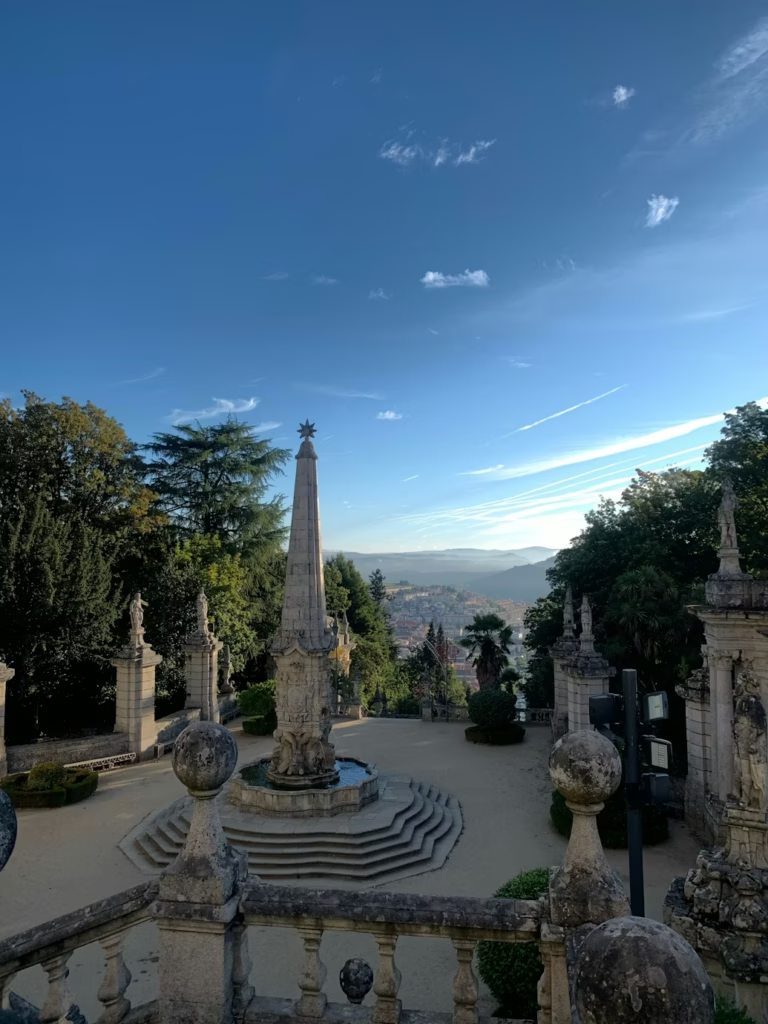
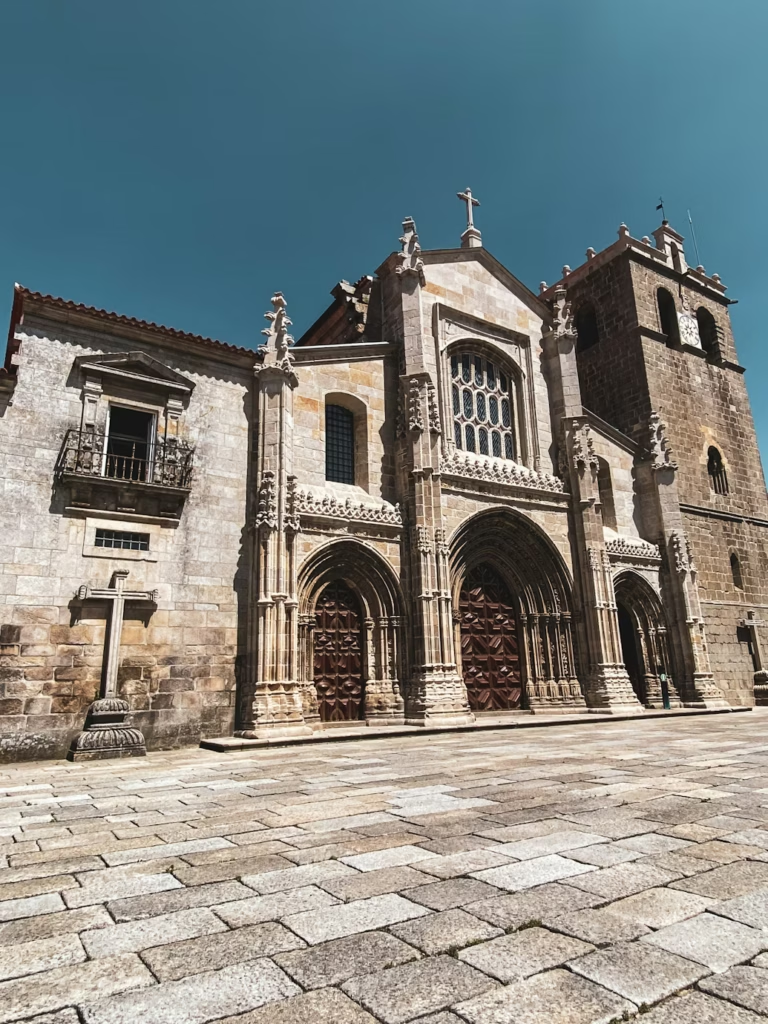
As the seat of the district diocese, Lamego boasts numerous religious monuments, including its Cathedral, the Church of São Pedro de Balsemão, and the Sanctuary of Our Lady of Remédios—the latter lending its name to the annual pilgrimage held on September 8th, which is also the city’s municipal holiday. Among its main attractions is the Castle of Lamego, a remarkable example of military architecture blending Romanesque and Gothic elements, perched on a hill and harmoniously adapted to the natural contours of the land.
Regional delicacies
Biscoito da Teixeira; pastéis de Lamego; Coelho Bravo no forno; Peixinhos de Chila
Lamego is also renowned for its gastronomy. Local specialties include cured hams, roast rabbit with oven-baked rice, and an array of wines, notably Port wine and celebrated sparkling wines. The fertile lands produce some of Portugal’s finest apples, cherries, and olives, which yield olive oil of recognized quality. Yet it is the vineyards that dominate the landscape, providing sustenance and prosperity to the local population for centuries.
Not to be missed ...
Our Lady dos Remédios Sanctuary; Cathedral; Lamego Castle; Saint Pedro de Balsemão Chapel; Raposeira Cellars; Lamego Museum