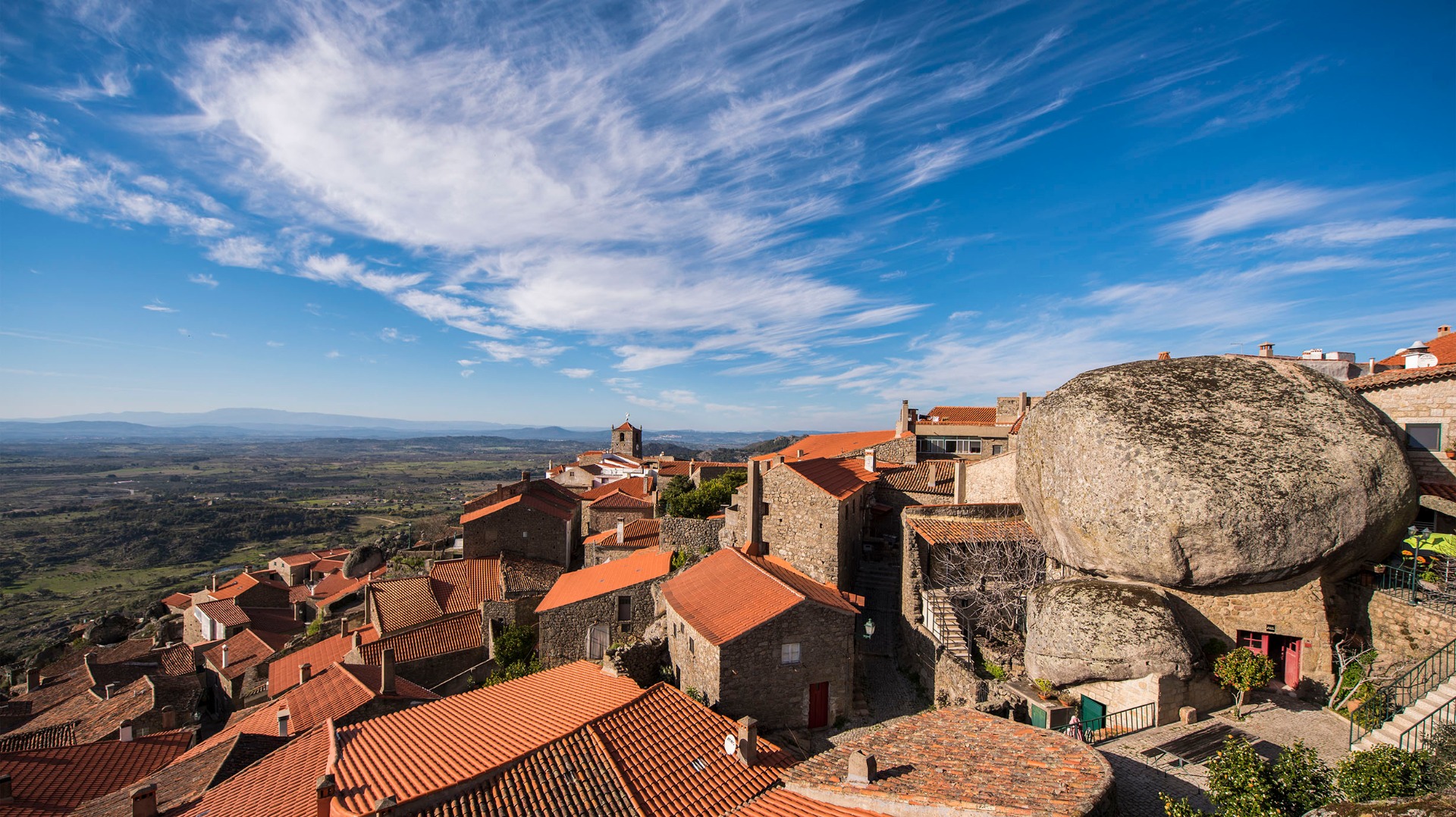
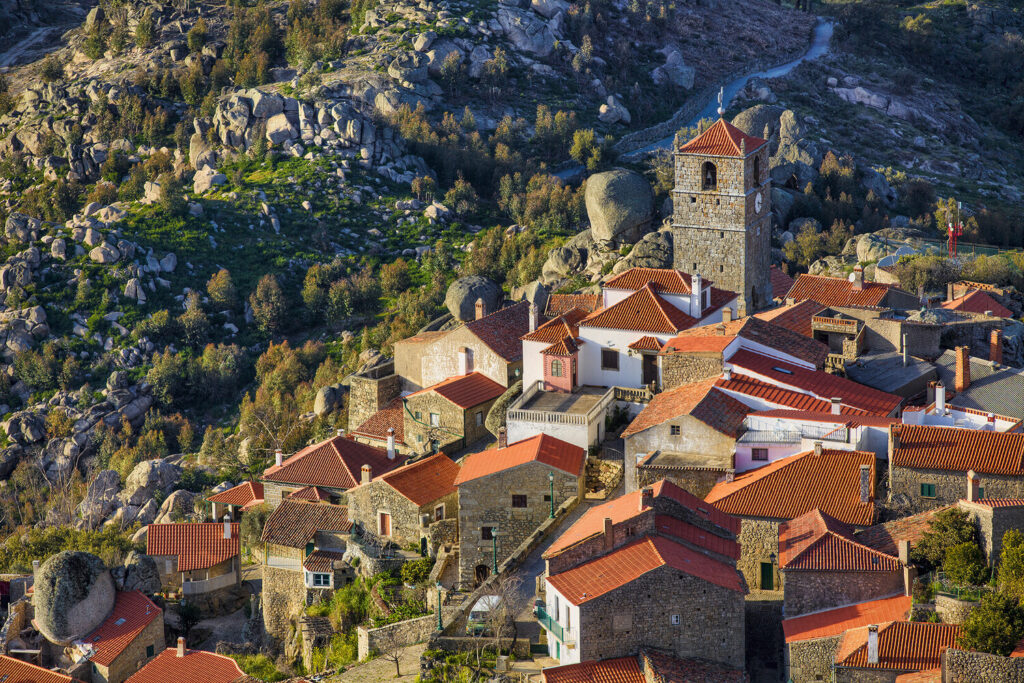
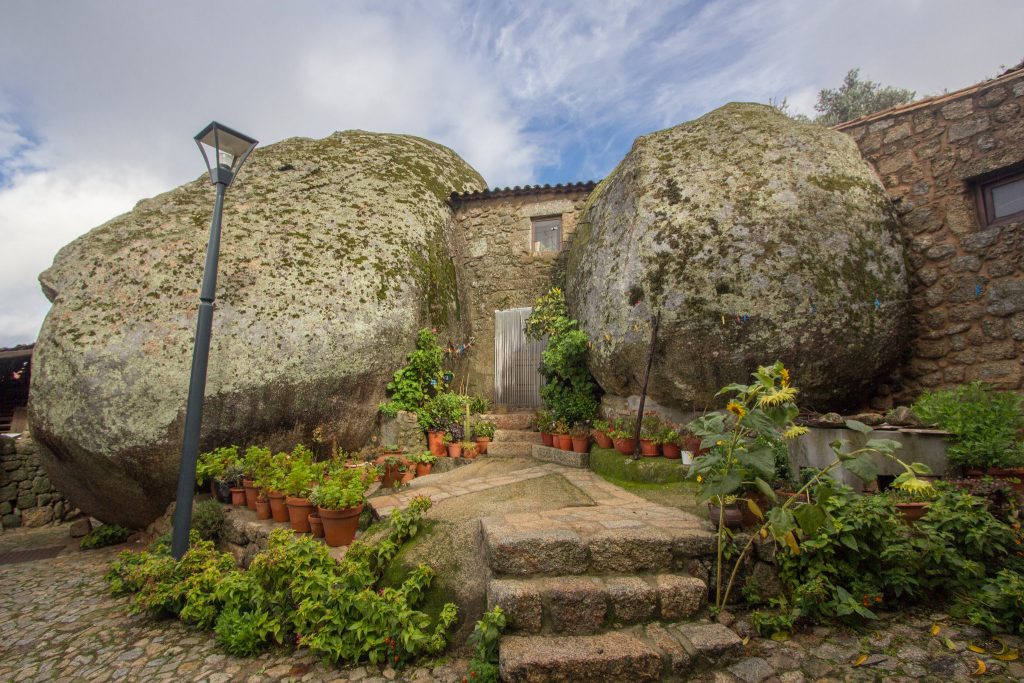
Located in the municipality of Idanha-a-Nova, Monsanto is known as the “most Portuguese village in Portugal,” a title earned through its unique architecture and deeply rooted traditions. Its houses, built among and beneath massive granite boulders, create a striking and unforgettable landscape that feels both ancient and timeless.
Population: 900 inhabitants
In the 21st century, Monsanto has preserved the beauty of its traditional homes and historic monuments while offering visitors a renewed sense of discovery. Despite its authenticity, the village continues to surprise, blending heritage with a quiet, evolving charm that invites exploration at every turn.
Human presence in the area dates back to the Paleolithic period, with more visible remains from the Roman era. Later occupied by the Moors, the village was conquered by Afonso Henriques in 1165 and subsequently granted to the Order of the Knights Templar. Under the command of Gualdim Pais, the iconic Monsanto Castle was built, dominating the surrounding landscape. In the 19th century, an accidental explosion on Christmas night partially destroyed the castle, leaving behind the towers of Peão and Menagem, as well as the evocative ruins of the Chapel of Saint Miguel.
Regional delicacies
Migas de feijão e grelos; Costeleta de Borrego à Granitos; Papas de Caroulo; Perdiz em molho de escabeche
Considered a living museum and an important part of Portugal’s cultural heritage, Monsanto is a place where paths wind through rocks and houses rise organically from the stone. At its highest point, reaching 758 meters, the village stands as a remarkable fusion of nature and human ingenuity, an extraordinary destination that is truly worth visiting.
Not to be missed ...
Monsanto Castle; Clock Tower; Misericordy Church; Parish Church of Saint Salvador; Necropolis of Saint Miguel