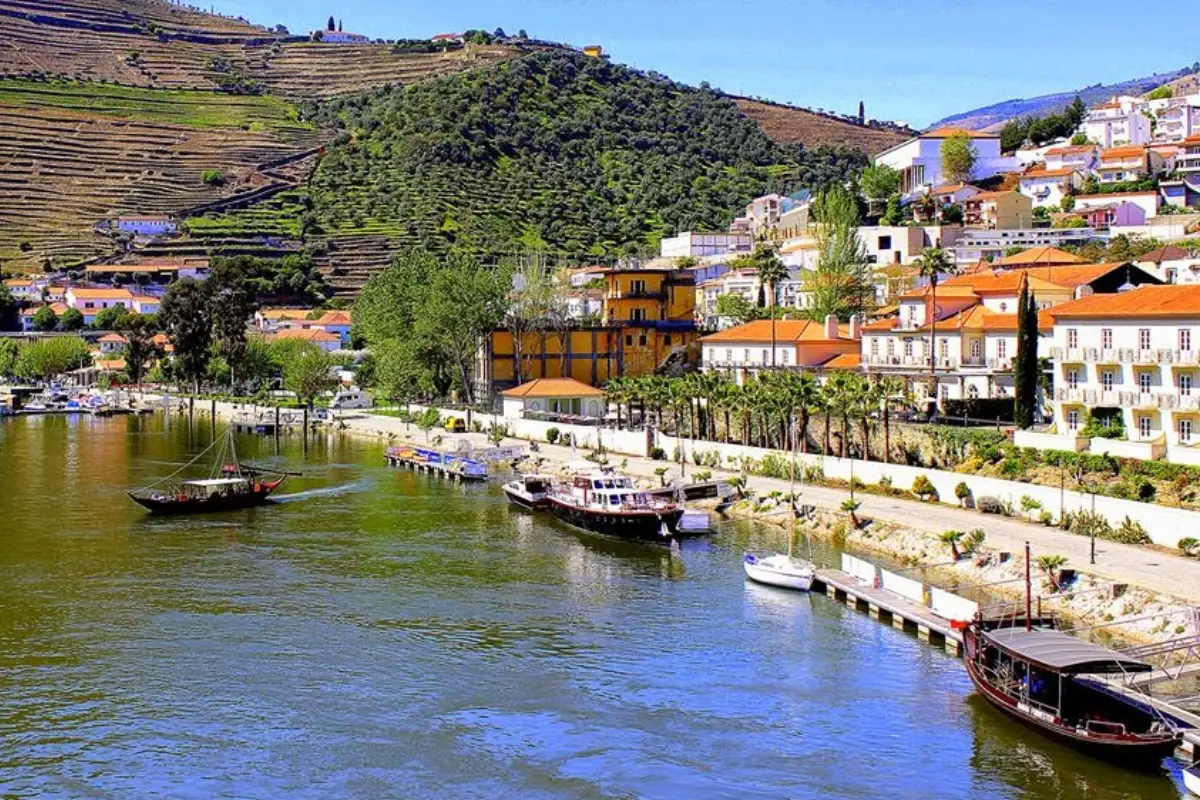
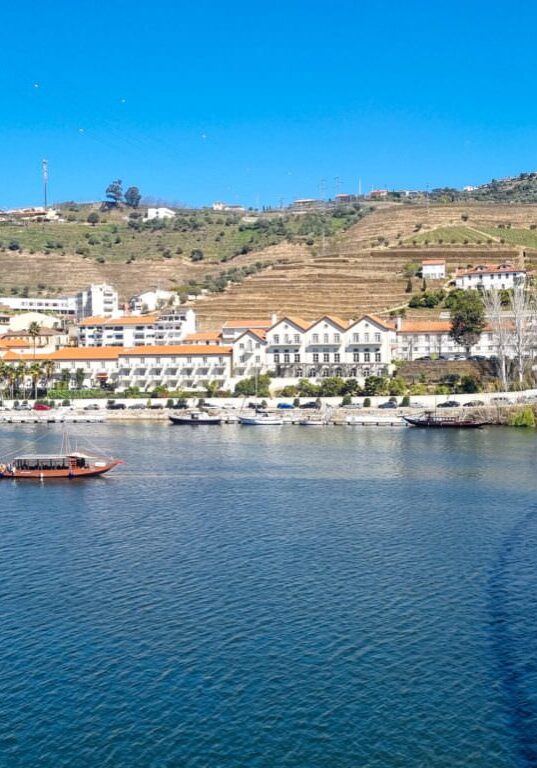
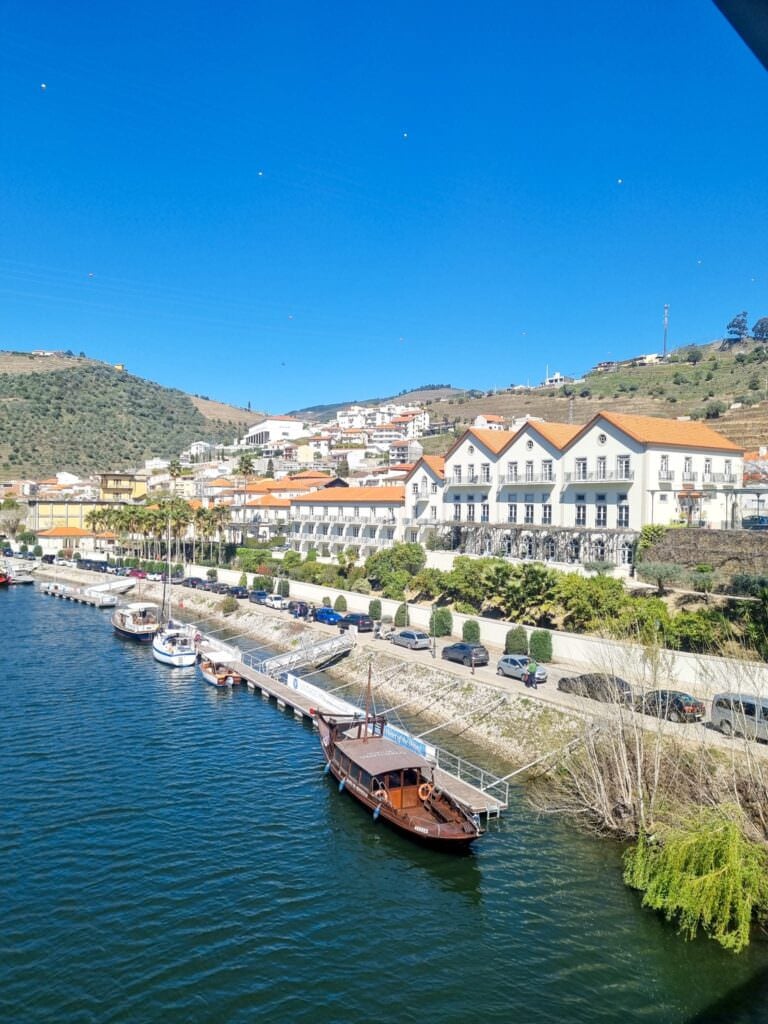
Pinhão is a small village nestled in a bend of the Douro River, at the heart of the Port wine region. Surrounded by renowned wine estates, it is one of the most emblematic locations in the Douro Valley. The landscape, classified as a UNESCO World Heritage Site, is breathtaking, and the village is typically reached by crossing its striking iron bridge, whose elegant arches stand out beautifully against the rolling hills.
Population: 650 inhabitants
One of Pinhão’s most distinctive landmarks is its railway station. Like many places in Portugal, it is adorned with traditional azulejos (painted tiles) but here they take on a particularly special significance. The station features 24 tile panels depicting scenes of local life, including vineyard work, grape harvesting, and the surrounding rural landscapes, offering visitors a vivid glimpse into the region’s traditions.
Despite its small size, Pinhão holds an important place in the history of the region. It was the first village in the district of Vila Real to have both telephone service and piped water, reflecting its early role as a central hub in the Douro wine trade.
Regional delicacies
Doce de Pinhão; Bolo Borrachão; Bola de carne; Feijoada à Transmontana; Carnes Fumadas (smoked meat)
While visiting the local wine estates along the Douro Valley, take time to fully appreciate the scenery. The beauty of the river blends harmoniously with the geometric terraces of the vineyards, creating a unique and unforgettable landscape shaped by generations of human effort.